
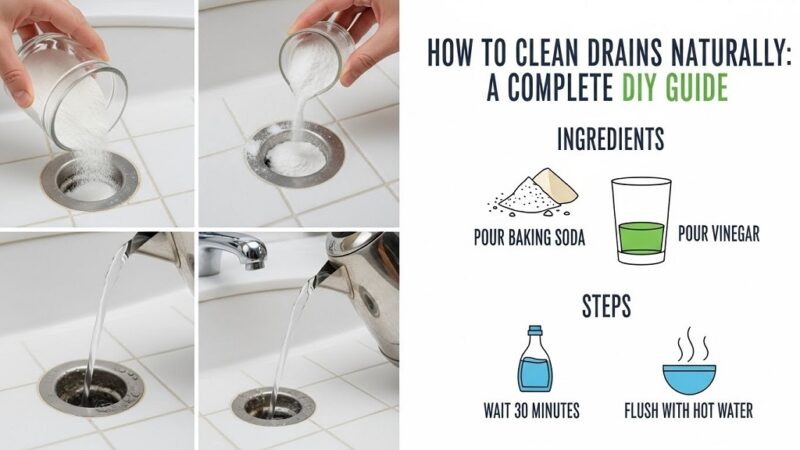
DIY drain cleaning is the process of clearing clogged or slow drains using safe, affordable, at-home methods instead of harsh chemical cleaners or professional services. It matters because most drain issues start small—and natural solutions can fix them early without damaging pipes, harming health, or polluting water systems.
Picture this: water pooling in your sink, a faint odor creeping up from the drain, and the temptation to grab a chemical cleaner from under the sink. But those quick fixes often come with hidden costs. They can corrode pipes, irritate skin and lungs, and harm the environment. The good news? You don’t need them.
This complete guide to natural drain cleaning shows you how to clean drains effectively using simple household ingredients. You’ll learn proven techniques, preventive habits, and when to escalate a clog—without keyword stuffing, fluff, or unsafe advice.
If you want a cleaner home, safer plumbing, and peace of mind, this guide is for you.
What Causes Drains to Clog in the First Place?
Short answer: Everyday buildup from grease, hair, soap scum, food particles, and mineral deposits causes most clogs.
Understanding the cause helps you choose the right homemade drain cleaner and avoid repeat problems.
- Kitchen drains: Grease, oil, food scraps, coffee grounds
- Bathroom sinks: Toothpaste, soap residue, hair
- Shower drains: Hair, soap scum, hard water minerals
- Floor drains: Dirt, lint, debris buildup
Most clogs form gradually. That’s why regular DIY drain cleaning works so well—it stops blockages before they harden.
How Can You Clean Drains Naturally Without Chemicals?

Quick answer: Use hot water, baking soda, vinegar, salt, and mechanical methods like plungers.
Natural drain cleaning relies on physical action and gentle chemical reactions. These methods are safe for most pipes, septic systems, and the environment.
Method 1: Boiling Water Flush
Best for: Grease and light buildup
- Boil 1–2 liters of water
- Pour slowly into the drain in stages
This simple step often solves minor clogs instantly.
Method 2: Baking Soda and Vinegar
Best for: Odors and organic buildup
- Pour ½ cup baking soda into the drain
- Add 1 cup white vinegar
- Cover and wait 15–30 minutes
- Flush with hot water
This classic homemade drain cleaner works through fizzing action that loosens debris.
Method 3: Salt and Baking Soda
Best for: Greasy kitchen drains
- Mix ½ cup salt + ½ cup baking soda
- Pour into drain
- Wait overnight
- Flush with boiling water
Which DIY Drain Cleaning Method Works Best for Each Drain?
Short answer: Match the method to the drain type and clog material.
| Drain Type | Best Natural Method |
|---|---|
| Kitchen Sink | Boiling water + salt & baking soda |
| Bathroom Sink | Baking soda + vinegar |
| Shower Drain | Hair removal + baking soda flush |
| Floor Drain | Hot water + manual cleaning |
Using the wrong method can waste time. Using the right one saves money and pipes.
How Do You Remove Hair Clogs Naturally?
Quick answer: Remove hair manually, then flush with natural cleaners.
Hair clogs don’t dissolve easily. Mechanical removal is key.
- Use a drain snake or wire hanger
- Pull out visible hair
- Follow with baking soda and vinegar
- Finish with hot water
This two-step DIY drain cleaning approach is far more effective than chemicals.
Can You Use Enzyme Cleaners as a Natural Option?
Short answer: Yes, enzyme cleaners are safe and effective for maintenance.
Enzyme-based drain cleaners use bacteria to digest organic matter. They’re eco-friendly and ideal for regular use.
Pros:
- Safe for pipes and septic systems
- No fumes or corrosion
Cons:
- Slow acting
- Not ideal for severe clogs
They’re best used weekly as part of a natural drain cleaning routine.
What DIY Drain Cleaning Mistakes Should You Avoid?
Quick answer: Avoid mixing chemicals, overusing boiling water, and ignoring early signs.
- Never mix vinegar with chemical cleaners
- Don’t pour grease down drains
- Avoid excessive boiling water on PVC pipes
- Don’t wait until the drain is fully blocked
Smart prevention beats emergency fixes every time.
How Can You Prevent Clogs with Simple Daily Habits?
Short answer: Small habits prevent big plumbing problems.
- Use drain strainers
- Run hot water after each use
- Dispose of grease in the trash
- Clean drains monthly with baking soda
Prevention is the most cost-effective form of DIY drain cleaning.
When Should You Call a Professional Instead?
Quick answer: When natural methods fail or clogs keep returning.
Signs you need help:
- Multiple drains backing up
- Sewage odors
- Water coming up through floor drains
Natural methods are powerful—but not magic.
Conclusion: Is DIY Drain Cleaning Worth It?
Yes. DIY drain cleaning is affordable, effective, and safer for your home and health. With simple ingredients like baking soda, vinegar, and salt, you can solve most drain problems naturally.
The key is consistency. Clean early. Clean gently. Prevent often.
Call to Action: Start today. Try one natural method this week and make it part of your routine. Bookmark this guide, share it with a friend, and take control of your drains—naturally.
FAQs: DIY Drain Cleaning Questions Answered
Is DIY drain cleaning safe for all pipes?
Yes. Most natural methods are safe for PVC, copper, and older plumbing when used correctly.
How often should I clean my drains naturally?
Once a month for maintenance. Weekly for high-use kitchen drains.
Does baking soda and vinegar really work?
Yes, for light clogs and odors. It’s not effective for solid blockages.
Can homemade drain cleaner damage septic systems?
No. Natural ingredients are septic-safe.
What is the best homemade drain cleaner?
Baking soda and vinegar for odors. Salt and baking soda for grease.
Are chemical drain cleaners bad?
They can damage pipes, harm health, and pollute water systems.
Related Topics: What is Pink Insulation Made of?
Related Topics: Regional Climate Impact on Roof Replacement Choice
