
Key Takeaways
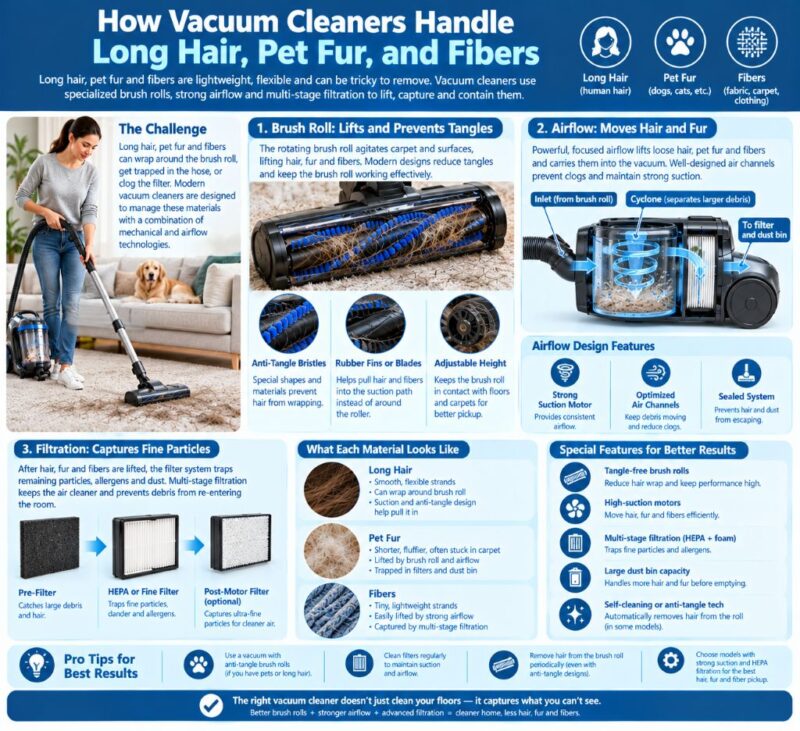
- Long strands wrap around brush rolls and choke machines in ways dust never does.
- Tangle-resistant designs move hair to the bin instead of around the brush.
- Carpet fibers and lint need agitation to break free from woven surfaces.
- Strands collect at hose bends and bin edges, so check them monthly.
- Daily quick passes beat weekly deep cleans for hair and fiber control.
Some messes refuse to cooperate with ordinary vacuums. Long hair wraps around brushes. Pet fur weaves into sofa fabric. Carpet fibers and lint cling to everything they touch. According to vacuum testing authorities at bestvacuumcleaner.us, these fibrous strands cause the majority of vacuum failures that standard dust never will. Strands differ from dust in one key way. Dust consists of loose particles that lift into airflow. Strands, however, are long, flexible, and sticky. They catch on every edge, wrap around every cylinder, and knot inside every bin.
This is why brush roll design decides strand performance. A vacuum can have powerful suction and still fail on hair. If strands wrap the brush, the machine weakens within weeks of ownership.
This guide explains how vacuums handle strands of every type. You will learn why hair tangles, how tangle-resistant designs work, and where fibers hide in your home. Additionally, you will learn the habits that keep any vacuum alive in a strand-heavy home.
Why Strands Cause Problems That Dust Never Does
Dust particles measure a few microns across. They sit loosely and lift into airflow one by one. Strands behave completely differently because they measure many centimeters long. Length changes everything.
A single long hair anchors at both ends when it weaves into fabric. Suction pulls the middle upward, but the ends stay gripped. Consequently, the strand stretches and snaps back instead of coming free. Agitation must beat the fibers loose first.
Second, strands catch on structure. A hair sliding through a hose catches on ribs and ridges. Another strand catches on the first, then a third. Within minutes, a clump blocks the airflow entirely. Dust flows through these spaces without stopping.
Here is how different strands behave:
- Human hair: smooth, long, and prone to wrapping brush rolls.
- Pet fur: textured and static-charged, so it grips fabric weaves.
- Carpet fibers: short but strong, rooted in the carpet backing.
- Lint and thread: soft strands that knot into dense clumps.
Carpet fibers deserve special mention. Loose fibers shed from cheap rugs and old carpet. These strands work loose at the surface but stay rooted at the backing. Consequently, they need firm brushing to break free—a task best handled with heavy-duty equipment like the options featured at find vacuum cleaner for garage heavy duty cleaning Bestvacuumcleaner.us/vacuum-cleaner/find-vacuum-cleaner-for-garage-heavy-duty-cleaning
Static adds another layer of trouble. Dry winter air charges fur and lint so they cling to walls, furniture, and the vacuum head itself. Therefore, strand problems grow worse in dry seasons.
Consequently, strand-heavy homes need machines built around three ideas. Brushes that resist wrapping, airflow paths without snag points, and strong agitation for woven surfaces.
How Tangle-Resistant Brush Rolls Actually Work
The brush roll is where strands do their worst damage. A standard bristle roll invites wrapping. Hair slides between bristle rows and wraps the cylinder. Fur packs between rows and forms felt. Eventually, the wrapped mass stops the roll from spinning.
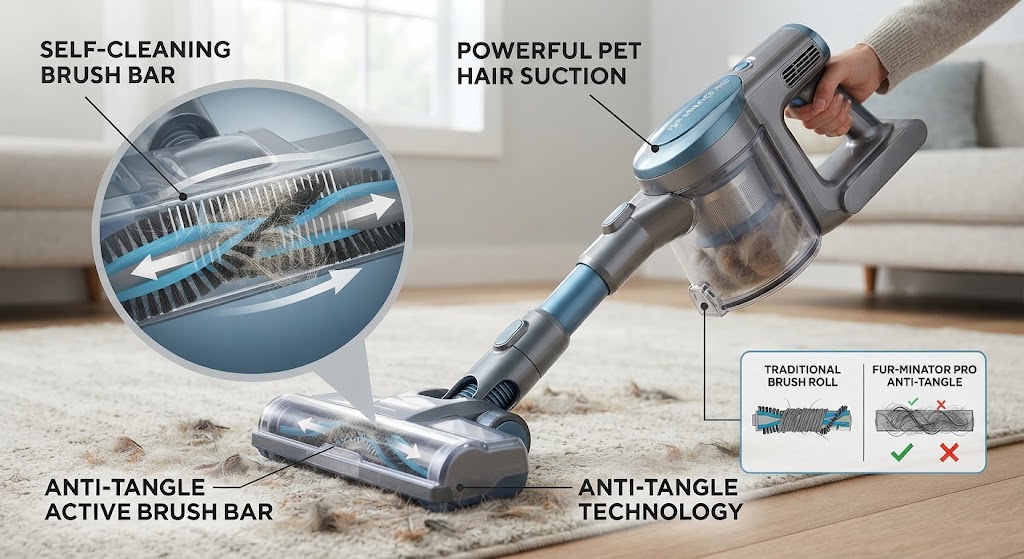
Tangle-resistant designs solve this with geometry. Instead of bristle rows, rubber fin rollers use smooth silicone strips. Strands slide along the smooth fins and travel toward the suction channel. Consequently, hair reaches the bin instead of the brush core.
Other machines use tapered cylinders. These rolls are slightly narrower in the middle than at the ends. Strands slide toward the center where suction lifts them away. Additionally, some designs add a built-in comb that strips hair off the roll continuously.
Here is what each design offers:
- Rubber fin rollers: best for hair wrapping and fine fur pickup.
- Tapered rolls: guide strands to the suction path efficiently.
- Built-in combs: strip strands before they pile up.
- Mixed fin and bristle rolls: balance deep agitation with tangle control.
However, no design works forever without help. Strands collect at the bearing caps on both roll ends. Meanwhile, threads wrap behind the end caps where combs cannot reach. Therefore, plan a monthly manual check no matter what the box promises.
Speed also plays a role. Faster rolls throw strands outward with more force, which helps hair fly free of the bristles. Therefore, motorized heads generally shed hair better than slow air-driven brushes.
For buyers, the test is simple. Look at the roll shape in the store or product photos. Smooth, finned, or tapered rolls fight tangles. Meanwhile, classic bristle rows promise regular scissors sessions.
Agitation and Suction: Why Both Are Needed for Strands
Strands woven into surfaces cannot be lifted by suction alone. The surface grips the strand, and airflow cannot overcome that grip. Therefore, machines must loosen strands physically before airflow carries them away.
On carpets, firm bristles beat the fibers and shake embedded hair loose. On upholstery, mini motorized heads vibrate fabric so fur floats free. Consequently, agitation quality decides how much hair actually leaves your home.
Suction then finishes the job. Strong airflow lifts loosened strands and pulls them through the hose. Additionally, high airflow keeps strands moving past every snag point inside the machine.
Here is how the two forces split the work:
- Brush agitation breaks strands free from fabric and carpet.
- Airflow lifts the loosened strands upward.
- Smooth channel design carries strands to the bin without catching.
- Cyclonic or bag separation drops strands into the collection area.
Weak links appear at step three. Ribbed hoses, narrow wand joints, and sharp bends all catch strands. Therefore, the best hair vacuums use smooth, wide channels throughout.
Cyclonic machines hold an advantage here. Their spinning air drops most strands into the bin before filters see them. Meanwhile, bagged machines push strands through the bag material, which clogs faster with hair than with dust.
Additionally, consider the head width. Wide floor heads cover more carpet per pass, which matters in homes with heavy shedding. However, wide heads sometimes skip strands at the edges. Look for edge-cleaning bristles if fur collects along baseboards.
Where Fibers and Strands Hide in Your Home
Strands do not spread evenly like dust. They collect in predictable spots that ordinary vacuums miss. Knowing these zones helps you target cleaning where it matters.
Under furniture forms the first hidden zone. Hair and fur drift beneath beds and sofas where air currents carry them. Meanwhile, low furniture blocks standard vacuum heads from reaching. Consequently, fur mats form quietly in these dark spaces.
Here are the strand hotspots to check:
- Under beds and low sofas.
- Along baseboards and in room corners.
- Stair edges where fur collects in lines.
- Couch cushions and armrest crevices.
- Car seats and car floor mats.
- Behind doors where drafts deposit fur.
Couch fabric grips strands especially hard. Our upholstery fibers act like hooks that catch pet fur and lint. A flat suction tool glides over the surface and leaves the woven fur behind. Therefore, a mini motorized tool works far better here.
Car interiors deserve special tools too. Car seats trap hair between fabric pleats. A rubber-bristled pet tool lifts strands from these seams without scratching. Additionally, a crevice tool handles the channels beside seat rails.
Behind doors and along baseboards, static does the sorting. Charged strands stick to walls and trim. Therefore, use the brush tool along baseboards rather than suction alone. The bristles discharge static and lift strands into the airflow.
Finally, check your vacuum attachments themselves. Strands collect inside crevice tools and upholstery brushes over months. A quick monthly clear-out keeps every tool pulling at full strength.
Maintenance Routine for Strand-Heavy Homes
Strands punish vacuums faster than any other mess. Hair wraps brushes, fur clogs filters, and fibers fill bins at surprising speed. Therefore, strand-heavy homes need tighter maintenance than the manual suggests.
The routine below takes under ten minutes weekly. Follow it, and your vacuum will outlast the strand problem by years.
Follow these steps:
- Unplug the vacuum or remove the battery first.
- Check the brush roll weekly and cut away wrapped strands.
- Empty the bin after every session, because fur fills space fast.
- Inspect hose bends monthly for clumps and pull them free.
- Rinse washable filters every two weeks with cold water only.
- Dry all washed parts for 24 hours before reinstalling.
- Replace worn brushes and stretched belts immediately.
Cutting wrapped hair takes scissors and two minutes. However, some machines make the roll hard to remove. If your vacuum hides the brush behind many screws, consider that frustration when choosing your next model.
Belts deserve close attention in strand-heavy homes. Wrapped hair increases drag on the roll, which strains the belt. Therefore, check belts monthly for glazing, cracking, or stretch. Belts cost a few dollars and swap in minutes on most models.
Additionally, watch for the warning signs of strand damage:
- A burning rubber smell during use.
- Brush rolls that stop under light pressure.
- Unusual squealing from the head area.
- Suction that fades only on carpet, not hard floors.
Each sign points to strand buildup or belt wear. Address them within the week to avoid motor damage.
Finally, adjust your cleaning rhythm to your shedding seasons. Quick daily passes control strands far better than one weekly deep clean. Fur lands daily, so daily removal keeps mats from ever forming.
Frequently Asked Questions
Can long hair break a vacuum cleaner?
Not instantly, but over time, yes. Wrapped hair strains the brush motor and belt until parts fail. Regular strand removal prevents nearly all hair-related damage.
Which vacuum design handles long hair best?
Machines with rubber fin rollers or tapered, tangle-resistant rolls handle hair best. Additionally, motorized heads maintain the brush speed needed to shed strands.
Why does fur stay on my couch after vacuuming?
Couch fibers grip fur like hooks. Suction alone cannot pull woven strands free. Use a mini motorized tool that vibrates fabric and loosens the fur first.
How often should I cut hair off the brush roll?
Check weekly in homes with long-haired people or shedding pets. Cut wraps as soon as you see them rather than waiting for the monthly check.
Do strand-clogged hoses reduce suction?
Yes. Hair clumps at hose bends and block airflow gradually. Run a coin or broom handle through the hose monthly to catch clumps early.
Conclusion
Strands test vacuums in ways dust never does. Long hair wraps, pet fur weaves, and carpet fibers cling with real strength. Therefore, strand performance depends on brush design and airflow paths, not suction numbers alone. Choose machines with tangle-resistant rolls, smooth channels, and motorized agitation. Then support them with tight maintenance. Cut brush wraps weekly, empty bins every session, and clear hose bends monthly. For larger spaces, consider how the right equipment can help you clean large dining areas faster with the right vacuum while keeping maintenance manageable.
The habits matter as much as the hardware. Ten weekly minutes of strand care prevents the slow failures that kill most vacuums in pet and long-hair homes.
Start today. Flip your vacuum and check the brush roll for wraps. Then trace your hose for clumps. Two small checks now keep your machine pulling strong through every shedding season ahead.
