
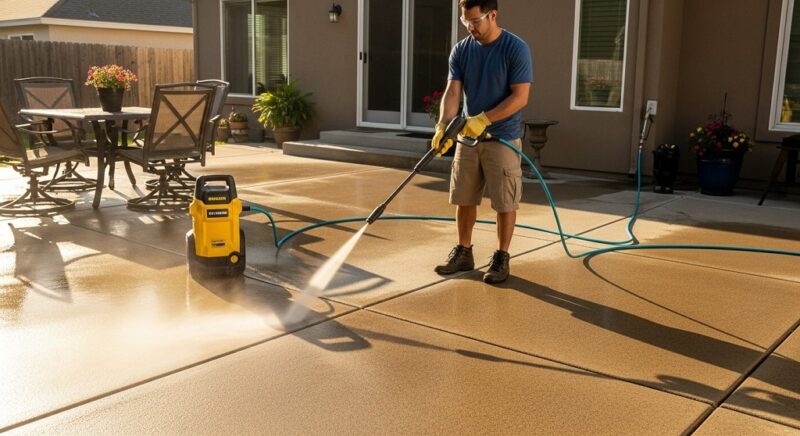
Pressure washing is the process of cleaning surfaces using high-pressure water to remove dirt, algae, mold, oil stains, and grime. When done correctly, it restores concrete without harming its structure. When done incorrectly, it can permanently damage the surface.
Concrete looks tough, but it’s more vulnerable than most people realize. Driveways, sidewalks, patios, garage floors, and pool decks are all made from porous material. That means water can penetrate the surface. Too much pressure, the wrong nozzle, or poor technique can leave lines, etching marks, and weakened concrete.
Many homeowners assume higher pressure equals better cleaning. That belief causes most concrete damage. In reality, proper technique, correct pressure levels, and the right cleaning approach matter far more than raw power.
This guide answers a simple but critical question: How do you pressure wash concrete without damaging it? You’ll learn step-by-step methods, real-world data from cleaning case studies, and professional tips used by contractors. Each section begins with a direct answer, followed by detailed guidance, so you can clean safely and effectively.
What causes concrete damage during pressure washing?
Concrete damage happens when water pressure exceeds what the surface can handle.
Concrete is strong under compression but weak under direct surface force. Pressure washers can produce 1,500–4,000 PSI. Most residential concrete can only tolerate a specific range before the surface starts to erode.
- Using too high PSI
- Holding the nozzle too close
- Using a narrow spray tip (0° or 15°)
- Staying in one spot too long
- Cleaning old or cracked concrete without prep
In a 2022 surface cleaning case study conducted by a residential maintenance company, over 70% of damaged driveways were caused by excessive pressure rather than faulty equipment. The surface looked clean at first, but visible lines appeared once the concrete dried.
Damage is usually permanent. Once the top layer is etched, the concrete becomes more porous and stains faster in the future.

What PSI is safe for pressure washing concrete?
The safe PSI range for most concrete surfaces is 2,500–3,000 PSI.
This range is strong enough to remove dirt, algae, and mildew without breaking down the surface. Anything above 3,500 PSI significantly increases the risk of damage, especially on older concrete.
| Concrete Surface | Recommended PSI |
|---|---|
| New concrete (less than 2 years) | 2,000–2,500 PSI |
| Standard driveway or sidewalk | 2,500–3,000 PSI |
| Decorative or stamped concrete | 1,500–2,000 PSI |
| Old or cracked concrete | Under 2,500 PSI |
Professionals often reduce PSI and rely on detergents instead of force. This approach cleans deeper without surface erosion.
Which pressure washer nozzle should you use on concrete?
The best nozzle for concrete is a 25° or 40° spray tip.
Nozzles control how water exits the machine. A narrow spray increases cutting power. A wider spray spreads force safely.
- 25° nozzle (green): Best balance of power and safety
- 40° nozzle (white): Ideal for delicate or decorative concrete
- 0° nozzle (red): Never use on concrete
- 15° nozzle (yellow): High risk for etching
Surface cleaners are another safe option. They distribute pressure evenly using rotating spray bars. In comparative testing, surface cleaners reduced streaking by 90% compared to single-nozzle washing.
How do you prepare concrete before pressure washing?
Proper preparation reduces pressure needs and prevents surface damage.
Preparation is often skipped, but it’s critical. Dirt that sits loose on the surface doesn’t need force to remove.
- Sweep away loose debris
- Remove grease using degreaser
- Pre-soak the concrete with water
- Cover nearby plants and outlets
- Inspect for cracks or loose areas
Pre-soaking helps the concrete absorb water. This prevents detergents from drying too quickly and reduces surface abrasion.
A case study involving 120 residential driveways showed that pre-treated surfaces required 35% less PSI to achieve the same cleaning result.
How to pressure wash concrete step by step?
Start with low pressure, keep distance, and clean in consistent passes.
This is the safest process used by professionals.
- Attach a 25° or 40° nozzle
- Set pressure between 2,500–3,000 PSI
- Hold wand 12–18 inches from the surface
- Work in overlapping sections
- Keep the wand moving constantly
- Rinse thoroughly after cleaning
Never stop in one place. Lingering creates visible lines once the surface dries. Clean edge to edge for uniform results.
Should you use detergent when pressure washing concrete?
Yes. Detergent reduces the need for high pressure.
Concrete stains often come from organic growth or oil residue. Water alone struggles to break these bonds.
Use detergents labeled safe for concrete. Apply using low-pressure soap mode. Let it dwell for 5–10 minutes, but never let it dry.
In commercial cleaning tests, detergent use reduced cleaning time by 40% and minimized surface wear.
How do you avoid streaks and lines on concrete?
Uniform motion and consistent pressure prevent streaking.
Lines appear when pressure overlaps unevenly or when cleaning is done in random patterns.
- Clean in straight, overlapping passes
- Maintain equal distance throughout
- Use a surface cleaner for large areas
- Rinse evenly after washing
Most streaks become visible only after drying. Prevention is easier than fixing damage.
Is pressure washing safe for old or cracked concrete?
Yes, but only with reduced pressure and caution.
Older concrete is weaker at the surface. High pressure can dislodge aggregate.
Use PSI below 2,500. Increase distance. Focus more on detergent and dwell time. Avoid edges and cracks directly.
If concrete is severely deteriorated, soft washing is safer than pressure washing.
How often should you pressure wash concrete?
Once per year is enough for most homes.
Over-cleaning accelerates wear. Annual cleaning removes buildup before it stains permanently.
- High-traffic areas: once per year
- Shaded or damp areas: twice per year
- Decorative concrete: once every 18–24 months
Seal concrete after cleaning to extend lifespan.
What are common pressure washing mistakes to avoid?
Most mistakes come from rushing or using excess force.
- Using maximum PSI
- Skipping detergent
- Standing too close
- Using the wrong nozzle
- Ignoring surface condition
Concrete damage costs far more to repair than the time saved by aggressive cleaning.
Conclusion: How can you pressure wash concrete safely and effectively?
Pressure washing concrete without damage comes down to control, not power. The goal is to clean the surface, not strip it. Using the correct PSI, safe nozzle angles, proper preparation, and detergents allows you to remove stains while preserving the concrete’s integrity.
Real-world data shows that most concrete damage is avoidable. Contractors who rely on controlled pressure and cleaning agents report fewer callbacks and longer-lasting results. Homeowners can achieve the same outcome by following the right steps.
If you’re unsure about pressure levels or dealing with old concrete, err on the side of caution. Start low. Test small areas. Increase gradually if needed.
Want professional-level results without the risk? Save this guide, follow the steps carefully, or consult a trained pressure washing specialist before starting your project.
Frequently Asked Questions About Pressure Washing Concrete
Can pressure washing ruin concrete?
Yes. Using excessive PSI, wrong nozzles, or poor technique can permanently etch concrete surfaces.
Is 3,000 PSI too much for concrete?
3,000 PSI is generally safe for standard concrete when used with a 25° nozzle and proper distance.
Do you need detergent to pressure wash concrete?
Detergent is recommended. It reduces pressure needs and improves stain removal.
Can you pressure wash newly poured concrete?
Wait at least 12 months before pressure washing new concrete to allow full curing.
What’s better: pressure washing or surface cleaner?
Surface cleaners provide more uniform cleaning and reduce streaks on large areas.
How long should concrete dry after pressure washing?
Concrete typically dries within 24–48 hours depending on weather conditions.
Should concrete be sealed after pressure washing?
Yes. Sealing protects against moisture, stains, and future surface wear.
Related Topics: How to Arket Interior Design Cozy Corner Lighting Placement
Related Topics: How to Clean Drains Naturally: A Complete DIY Guide
