
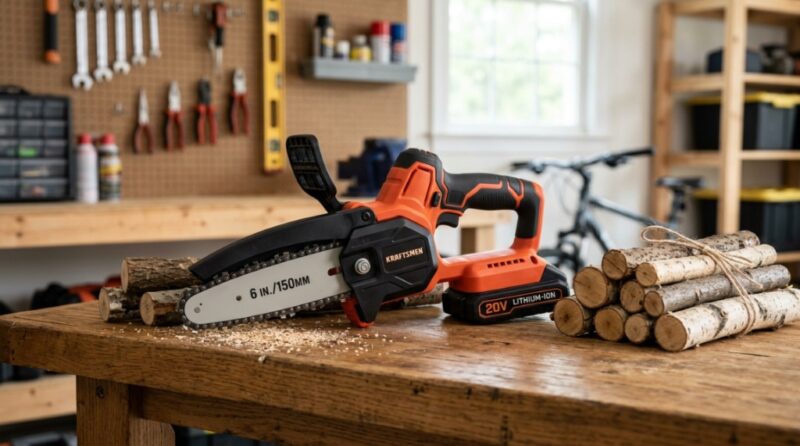
If you have spent an afternoon wrestling with a heavy gas chainsaw or fighting a tangled extension cord while trimming branches, you already know the appeal of a cordless option. The question is no longer whether battery-powered saws can handle real work—it’s which model actually deserves a place in your garage. For most homeowners, the ideal battery-powered handheld chainsaw balances cutting power, battery life, safety features, and weight without requiring a second mortgage. This guide breaks down exactly what matters, what doesn’t, and how to choose the right tool for your specific property.
Key Takeaways
- A battery-powered handheld chainsaw is ideal for pruning, limbing, and light firewood cutting—not for felling large trees or full-day logging sessions.
- Battery voltage (18V vs. 40V vs. 60V) matters less than the actual torque and amp-hour rating of the battery pack.
- Bar length should match the thickest branch you plan to cut; a 6-inch bar is for small limbs, while 10–12 inches suits most residential needs.
- Tool-less chain tensioning and automatic oilers significantly reduce the hassle of regular maintenance.
- Buying into a battery platform you already own (like DeWalt, Milwaukee, or Ryobi) is often smarter than starting a new system.
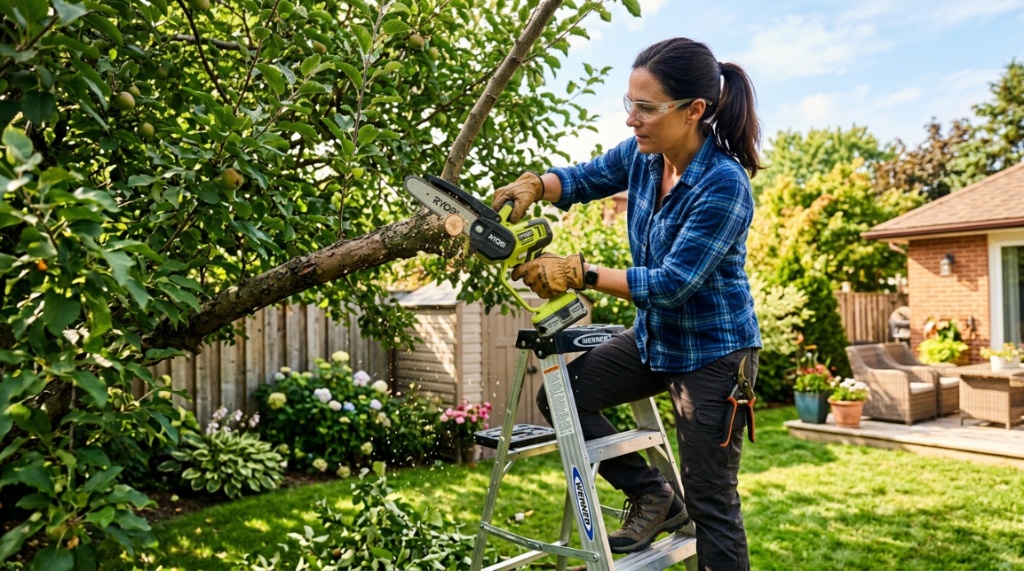
Why Switch to a Battery-Powered Handheld Chainsaw?
The shift away from gas-powered equipment is not just a trend. For homeowners, cordless saws solve several practical problems. Gas chainsaws require mixing fuel, dealing with pull-start frustration, performing carburetor maintenance, and managing the noise that irritates neighbors. Battery models start instantly, run quietly, and require virtually zero upkeep beyond chain sharpening and occasional bar lubrication.
But there is a trade-off. A battery-powered handheld chainsaw will not replace a professional gas saw for heavy-duty work. If you are clear about the intended use—clearing storm damage, trimming overgrown shrubs, cutting small logs for firewood—a cordless unit is not just adequate; it is often the more pleasant tool to operate. The absence of vibration and exhaust fumes alone makes extended use far more comfortable.
What Can a Cordless Saw Actually Handle?
Realistic expectations matter. A typical residential model with a 6-inch bar handles branches up to about 4–5 inches in diameter. A 10-inch bar extends that capability to roughly 8–9 inches. If you regularly deal with larger trunks, you are better served by a 12-inch or 14-inch model with higher voltage. The common thread among the best options is consistency—a saw that maintains cutting speed without bogging down as the battery drains.
For example, a quality cordless saw can make dozens of cuts through 4-inch limbs on a single charge. Tackling dense, hardwood logs will drain the battery twice as fast as softwood or green branches. Planning your work session around battery capacity—rather than discovering mid-cut that the tool has died—is the practical reality of cordless ownership,
For related plumbing and outdoor maintenance projects around your property, make sure to check out this guide on the Pipe Threader Tool for Cutting & Threading Pipes.
Key Factors to Evaluate Before Buying
Choosing the right saw goes far beyond reading the marketing claims on the box. Several specifications and design features directly affect day-to-day usability. Understanding these details will prevent an expensive mistake.
Voltage, Torque, and Battery Capacity
Higher voltage generally means more power, but it also increases weight and cost. An 18V or 20V saw is enough for light pruning. A 40V or 60V model gives you the headroom for tougher cuts and less bogging down under load. Beyond voltage, consider the amp-hour (Ah) rating. A 4Ah battery delivers roughly twice the runtime of a 2Ah battery, but it also adds noticeable weight. Since most modern saws come as bare tools or with a single battery, factor in the cost of additional packs if you plan extended sessions.
Bar Length and Chain Speed
Bar length determines the maximum cut depth. As a rule, choose a bar that is at least two inches longer than the thickest material you will cut. Chain speed, measured in feet per second, indicates how quickly the chain rotates. Faster speeds produce cleaner cuts but drain the battery faster. Lighter, low-speed chains are safer for beginners because they reduce kickback risk, though they take longer to chew through material.
Safety Features You Should Not Ignore
Kickback is the most dangerous chainsaw hazard. Look for a low-kickback chain design, an inertia-activated chain brake, and a hand guard. These features are not optional extras; they are the difference between a minor scare and a serious injury. Additionally, ensure that the saw’s electric brake stops the chain promptly when you release the trigger. A chain that keeps spinning after the trigger is released is annoying and dangerous.
Budget vs. Premium: Where Should You Spend?
Your budget significantly influences the quality of the saw. Entry-level models around $80–$120 offer acceptable performance for occasional light trimming. Mid-range options in the $120–$200 bracket typically include brushless motors, better battery efficiency, and more durable bars. Premium saws above $200 are usually bundled with higher-capacity batteries and pro-grade build quality, but they may exceed what typical homeowners need.
For most people, a quality mid-range battery-powered handheld chainsaw will handle the majority of residential tasks with ease. The extra investment in that segment often delivers features that make the tool safer and more pleasant to use.
Brushless Motors: Are They Worth the Premium?
Brushless motors are significantly more efficient and durable than their brushed counterparts. They generate less heat, provide more torque, and extend battery runtime by 25–50 percent. For anyone planning moderate to regular use, the higher upfront cost of a brushless saw is justified. If you only plan to cut a few branches twice a year, a brushed motor may suffice, but you will notice the difference in cutting speed and battery life.
Tool-Less Chain Tensioning Is Non-Negotiable
Adjusting a chainsaw chain with a wrench and screwdriver is an outdated chore. Modern saws feature a side-mounted dial or lever that lets you adjust tension in seconds without any tools. This is not just a convenience—it is a safety feature. A properly tensioned chain is less likely to derail or kick back. If a saw lacks this feature, strongly reconsider your choice.
How to Match the Saw to Your Property
Your specific landscape should dictate the way you choose. A one-acre lot with mature oak trees demands a different tool than a small suburban yard with ornamental shrubs.
Small Yards and Light Pruning
If your primary tasks are trimming small branches above head level or cutting back overgrown bushes, a compact 6-inch saw is ideal. The short bar makes it highly maneuverable, and the overall weight of 4–5 pounds is comparable to a cordless drill. These saws excel at work that is normally done with manual loppers—but they do it in a fraction of the time.
Medium Properties with Mixed Vegetation
Owners of half-acre to one-acre lots who deal with fallen branches, storm cleanup, and firewood preparation should step up to a 10-inch or 12-inch model. These saws provide enough power and bar length to handle larger limbs without excessive cutting time. A 40V battery platform is recommended here to ensure consistent cutting performance.
Large Wooded Properties
For properties with denser tree cover and serious firewood needs, you need more than a top-handle saw. Consider a rear-handle model with a 12-inch or 14-inch bar and a high-capacity battery. While still limited compared to gas saws, these units let you work longer and cut larger diameter logs. Be prepared for the increased weight—around 7–9 pounds—which will tire your arms faster than a compact model.
Common Mistakes to Avoid When Buying
Many homeowners regret their purchase not because the saw is defective, but because they bought the wrong type of tool. Common errors include overestimating battery runtime, underestimating the importance of chain quality, and ignoring the need for a second battery. Further, several buyers are surprised when the saw underperforms on hardwood. Read the battery specifications carefully. A 2Ah battery on a 40V saw typically yields only 15–20 minutes of continuous cutting. That is fine for quick jobs but frustrating for longer projects.
Chain sharpness is also the leading cause of poor cutting performance. A dull chain produces sawdust rather than clean chips, strains the motor, and drains the battery rapidly. Purchase spare chains and learn to sharpen them with a round file. This simple maintenance step dramatically extends the life and effectiveness of your saw.
Recommended Specs for Homeowners
Assuming you are not a professional arborist, this practical specification range covers most scenarios:
| Feature | Recommended Range | Why it Matters |
|---|---|---|
| Voltage | 40–60V | Provides sufficient torque for hardwood without excessive weight |
| Bar Length | 8–12 inches | Handles the vast majority of residential branches and small logs |
| Battery Capacity | 4Ah or higher | Delivers adequate runtime for typical sessions (30–45 minutes) |
| Motor Type | Brushless | Increases efficiency, torque, and service life |
| Chain Tensioning | Tool-less | Simplifies maintenance and reduces downtime |
| Chain Brake | Inertia-activated | Critical safety feature that stops the chain during kickback |
Maintenance Tips to Extend Longevity
Battery-powered chainsaws are low-maintenance compared to gas models, but they are not zero-maintenance. After each use, clean sawdust and debris from the bar groove and oil port. A clogged oil port starves the chain of lubrication, causing premature chain and bar wear. Regularly inspect the chain tension before each use, as a loose chain can jump off the bar or break. Store the saw with a lightly oiled chain to prevent rust, and keep the battery in a cool, dry location, avoiding extreme temperatures that degrade lithium-ion cells.
Frequently Asked Questions
Can a battery-powered handheld chainsaw cut firewood?
Yes, it can cut firewood as long as the logs are within the bar’s length capacity and you have enough battery for the job. For occasional firewood preparation—splitting small logs into stove-sized pieces—a 10- or 12-inch saw with a 4Ah battery performs admirably. For large-scale firewood harvesting, a gas or plug-in electric saw remains more practical.
How long does the battery last on a single charge?
Runtime depends on battery capacity, motor efficiency, and cutting conditions. A typical 40V, 4Ah battery lasts roughly 30–40 minutes of intermittent cutting. Heavy pressure, hardwood, and dull chains drain the pack much faster. Buying a second battery is the most effective solution for longer projects.
Is a battery chainsaw safe for beginners?
Yes, they are generally safer than gas alternatives due to lower chain speeds, lighter weight, and reduced kickback potential. However, you must still wear proper protective gear—including eye protection, gloves, and chaps—and follow the same safe cutting techniques you would use with any chainsaw.
Why is lubricant important for a cordless chainsaw?
Bar and chain oil lubricates the chain as it runs along the bar, preventing overheating and reducing friction. Running a chainsaw without oil will quickly ruin the bar and chain, similar to running a car without engine oil. Most saws have a visible oil-level window, so check it before every use.
Conclusion
Choosing the best battery-powered handheld chainsaw for home use comes down to matching the tool to your specific tasks and expectations. The sweet spot for most homeowners is a brushless, 40V model with a 10-inch bar and tool-less chain tensioning. This configuration provides enough power for pruning, limbing, and light firewood preparation while remaining lightweight and safe enough for occasional users. Invest in a high-capacity battery, keep the chain sharp, and understand your saw’s limits. With the right unit, you can retire the fuel cans and crack the starter cord forever.
