
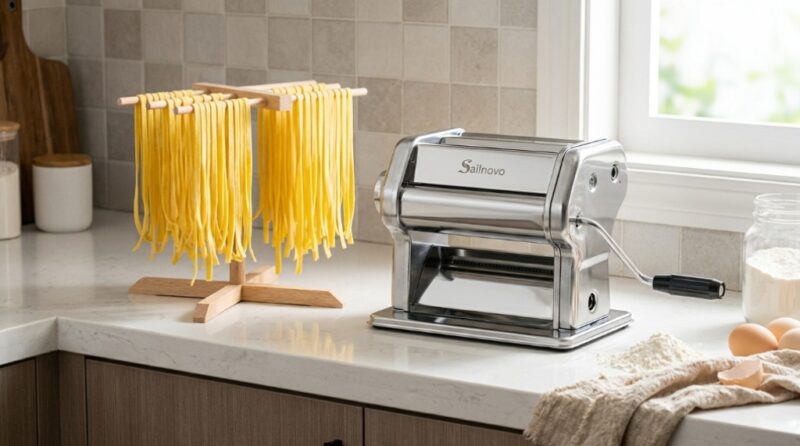
The Sailnovo pasta maker is a 2-in-1 machine that combines dough mixing with pasta rolling and cutting, and it has become a popular budget option for home cooks who want fresh pasta without a large investment. The feature most buyers ask about is its 9 thickness settings pasta maker design, which lets you move from delicate angel hair to sturdy lasagna sheets. This review explains how the machine actually works, where it performs well, where it falls short, and whether it fits your kitchen in 2026.
Key Takeaways
- The Sailnovo pasta maker uses a 2-in-1 design: one side mixes and kneads dough, the other rolls and cuts it into sheets or strands.
- Its 9 thickness settings cover a practical range for most home pasta styles, from thin noodles to thicker sheets for filled pasta.
- It suits beginners and casual cooks who want fresh pasta occasionally, not high-volume or commercial use.
- Automatic mixing saves effort, but you still need to monitor dough consistency and finish some steps by hand.
- Cleanup and drying time are the main practical drawbacks compared with simple manual rollers.
What the Sailnovo Pasta Maker Actually Does
The Sailnovo is an electric pasta machine with two functional sections. One section is a mixing bowl with a paddle that combines flour, eggs, and liquid into dough. The other section is a roller and cutter assembly that flattens the dough and slices it into the shape you choose. That combination is what the “2-in-1” label refers to, and it is the main reason this machine appeals to people who find manual kneading and rolling tedious.
Because it handles the mixing step automatically, you spend less time with your hands in sticky dough. You still control the recipe, the hydration level, and the final thickness. For anyone comparing this unit against a traditional hand-crank roller, a detailed 9 thickness settings pasta maker comparison can clarify how the electric design changes the workflow, especially around kneading and cleanup.
Mixing Side vs. Rolling Side
The mixing side works like a compact stand mixer dedicated to dough. You add ingredients, run it until a rough ball forms, then move that dough to the rolling side. The rolling side feeds the dough through adjustable rollers and then through a cutter for noodles or strips. Understanding these two stages matters because each one has its own learning curve and its own failure points.
What Comes in the Box
Most versions ship with the main unit, a mixing bowl and paddle, a dough hook or roller attachment, a cutter for at least one noodle width, and a cleaning tool. Accessory sets vary by seller, so check the specific listing before buying if a particular cutter width matters to you.
How the 9 Thickness Settings Work in Practice

The thickness dial typically moves through nine numbered positions, from the widest gap to the narrowest. You start with a thicker setting to flatten the dough without tearing it, then progressively narrow the rollers until you reach the thickness your recipe needs. This gradual approach is standard for any roller-style machine and is the single most important technique to get right.
Which Settings Suit Which Pasta
As a general guide, the widest settings are useful for the first passes and for thick shapes, the middle range works well for fettuccine and tagliatelle, and the narrowest settings produce thin sheets for angel hair or delicate noodles. Filled pasta like ravioli usually needs a medium-thin sheet that holds filling without breaking. Exact numbers vary by dough and machine, so treat the dial as a guide rather than a fixed recipe.
Why You Should Never Skip Settings
Jumping from the widest gap straight to a thin setting is the most common beginner mistake. The dough tears, wraps around the roller, or comes out uneven. Passing the dough through each setting once or twice gives the gluten time to relax and produces a smoother, stronger sheet. This step takes a few extra minutes but dramatically improves results.
Realistic Performance: Where It Shines and Where It Struggles
The Sailnovo performs best with small to medium batches of standard egg dough. It mixes consistently, rolls evenly when the dough is properly hydrated, and cuts clean strands. For a home cook making pasta for two to four people a few times a month, that is exactly the use case it was built for.
Where it struggles is with very stiff doughs, large batches, and extended sessions. Dense dough puts strain on the motor, and the machine may slow or stop. If you plan to make pasta for a crowd regularly, or you want to run the machine for an hour straight, a heavier-duty roller or a stand mixer with a pasta attachment will serve you better, for a reliable alternative comparison, check out our detailed leonebebe electric pasta maker review to see how other motorized machines stack up.
Dough Consistency Matters More Than the Machine
No pasta maker can fix dough that is too wet or too dry. A dough that is slightly tacky but not sticky rolls cleanly. If it crumbles, add a little liquid; if it sticks to the rollers, dust with flour. Learning to read the dough by feel will improve your results more than any feature on the machine.
Noise, Speed, and Stability
Electric pasta makers in this price range tend to be audible but not loud, similar to a small kitchen appliance. The unit should sit firmly on the counter; if it slides or vibrates, a non-slip mat helps. Feed dough slowly and let the machine pull it rather than pushing it, which reduces jams.
Sailnovo vs. Manual and Other Electric Pasta Makers
| Factor | Sailnovo 2-in-1 | Manual Hand-Crank Roller | Stand Mixer Attachment |
|---|---|---|---|
| Mixing | Automatic | By hand | Automatic (mixer) |
| Thickness control | 9 settings | Usually 6–9 settings | Typically 8 settings |
| Best for | Beginners, occasional use | Budget, full control | Owners of compatible mixers |
| Cleanup | More parts to clean | Simple, few parts | Moderate |
| Cost | Low to mid | Low | Depends on mixer |
The table above is a general comparison based on typical designs, not a tested specification of any single model. The takeaway: choose the Sailnovo if automatic mixing saves you real effort; choose a manual roller if you want maximum control and minimal cleanup; choose a mixer attachment if you already own a compatible stand mixer.
Setup and First Use: A Practical Walkthrough
- Unbox and wash removable parts that touch dough.
- Assemble the mixing bowl and paddle, then add flour and eggs.
- Run the mixer until a rough dough ball forms, then stop.
- Rest the dough briefly so the gluten relaxes.
- Switch to the rolling side and start on the widest setting.
- Pass the dough through each setting, narrowing gradually.
- Cut into your chosen shape and dust with flour to prevent sticking.
Cook fresh pasta within a short window or dry it for storage. Fresh egg pasta is best used the same day, while dried strands keep longer in an airtight container.
Cleaning, Maintenance, and Common Mistakes
Cleanup is the most frequently cited frustration with combination machines. Dough tends to lodge in the roller and cutter, and you cannot submerge the main unit in water. Use the included brush or a dry toothbrush to remove dried bits, and wipe surfaces with a barely damp cloth. Letting dough dry completely before brushing makes removal easier than cleaning it while wet and gummy.
Mistakes to Avoid
- Adding too much liquid and ending up with dough that jams the rollers.
- Skipping thickness settings and tearing the sheet.
- Overloading the mixing bowl, which strains the motor.
- Washing the main unit with water instead of wiping it down.
- Storing the machine with dough residue still on the rollers.
Who Should Buy the Sailnovo Pasta Maker in 2026
This machine fits you if you want to try fresh pasta at home without hand-kneading and without spending on premium equipment. It also suits gift-givers looking for an approachable entry point. It is a poor fit if you regularly cook for large groups, need commercial durability, or prefer a minimalist tool that is easy to clean in seconds. Matching the machine to your real cooking habits matters more than any single feature.
Frequently Asked Questions
How many thickness settings does the Sailnovo pasta maker have?
It has nine thickness settings, ranging from a wide gap for initial passes and thick shapes to narrow settings for thin sheets and fine noodles.
Can the Sailnovo make both dough and noodles?
Yes. The 2-in-1 design includes a mixing section for combining ingredients and a rolling and cutting section for forming sheets and strands.
Is it hard to clean?
It takes more effort than a manual roller because dough gets into the rollers and cutter. Clean parts while fresh and use a dry brush for the main unit, which should not be submerged in water.
What dough works best in this machine?
Standard egg dough with flour, eggs, and a small amount of liquid works well. Dough should be soft and slightly tacky, not sticky or crumbly, to roll cleanly through the settings.
Can it handle large batches?
It is designed for small to medium home batches. Very large or very stiff doughs can strain the motor, so split the work into smaller portions for best results.
Conclusion
The Sailnovo pasta maker is a sensible pick for 2026 cooks who want fresh pasta without manual kneading and without a premium price. Its 9 thickness settings provide enough range for most home recipes, and the 2-in-1 design saves genuine effort on mixing. The main trade-offs are cleanup time and limits on batch size. If you cook for a few people and value convenience, it is a reasonable buy; if you need durability and speed for frequent large batches, look at heavier-duty options instead.
