
Look above your garage door and follow the track back toward the wall. The answer to torsion vs extension springs sits right there, and it decides how your door lifts, how it should be maintained, and what a repair will involve. Many homeowners only think about it when the door stops opening or a loud bang comes from the ceiling. A quick visual check takes under a minute and saves confusion later. If you are comparing repair quotes or planning maintenance, Trade Car Hub covers practical ownership topics that help you ask better questions.
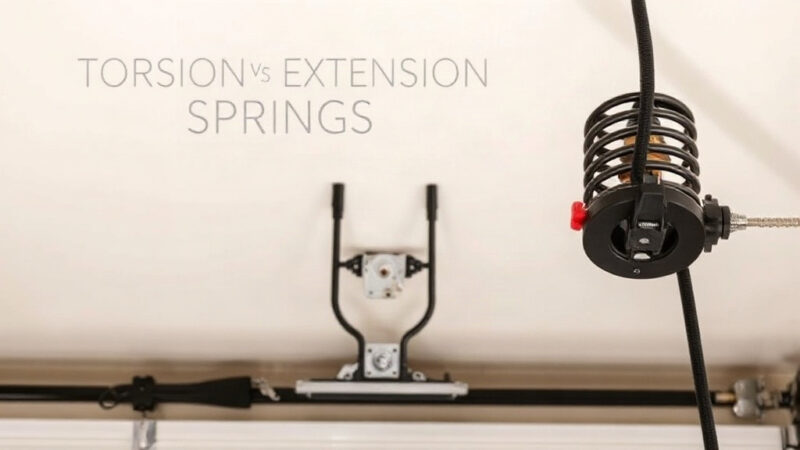
Quick answer: If you see one or two coiled springs mounted on a metal shaft above the door, you have a torsion system. If you see springs running along the horizontal tracks beside the door, you have extension springs. Torsion setups are the standard on most newer and heavier doors, while extension springs appear on many older or lighter single-car doors.
What is torsion vs extension springs?
The two systems store energy in different places and release it in different directions. Torsion springs twist around a shaft; extension springs stretch along a line. That single difference shapes everything else, from where the parts sit to how a technician services them safely.
Torsion springs mount on a steel shaft that runs above the door, parallel to the header. Cables attach to drums at each end of the shaft and connect to the bottom corners of the door. When the door closes, the springs wind tighter. When it opens, they unwind and help lift the weight. Most residential torsion setups use one or two springs, and heavier doors often carry two to share the load.
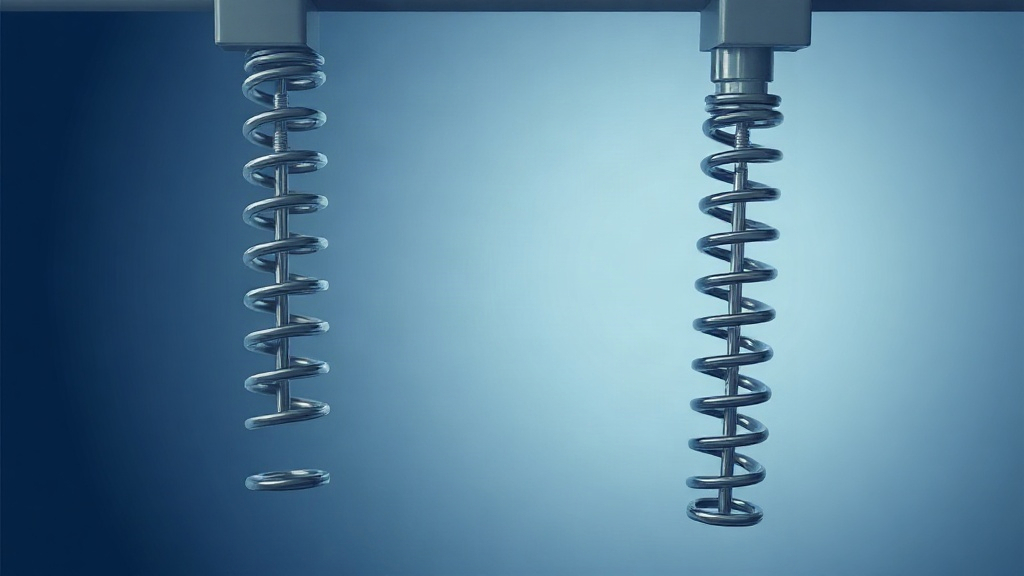
Extension springs hang above the horizontal tracks on each side of the door. They stretch as the door closes and contract as it opens, pulling the door upward through a system of pulleys and cables. A safety cable should run through the center of each spring, because a broken extension spring can whip toward anyone standing nearby.
Comparison: torsion vs extension springs
| Feature | Torsion springs | Extension springs |
|---|---|---|
| Location | Above the door on a shaft | Alongside the horizontal tracks |
| Action | Twist and unwind | Stretch and contract |
| Typical doors | Newer, heavier, double-car | Older, lighter, single-car |
| Lift balance | Even across the door | Can vary side to side |
The practical takeaway: position tells you the type instantly, and the type tells you what to expect from maintenance and repairs.
Here is a detail worth knowing. Torsion springs carry a painted color on one coil, and that color marks the wire size rather than the brand. The same logic applies across most manufacturers, so a technician can match a replacement without guessing. You can read more about garage door springs color codes to understand how those bands translate into size and lifting capacity.
Why torsion vs extension springs matters
Knowing which system you have changes how you plan for cost, safety, and daily use. The two designs fail in different ways and demand different precautions.
Safety comes first. A torsion spring stays contained on its shaft when it breaks. An extension spring can fly off its mount, which is why a steel safety cable through the spring is a basic requirement rather than an upgrade. If you look at your extension springs and see no cable, treat that as a priority fix. A snapped spring under load carries enough force to cause serious injury.
Repair cost and complexity follow the design. Torsion springs require winding bars and a careful understanding of stored force, so most homeowners should leave replacement to a trained technician. Extension springs are simpler to swap, though the door still needs to be fully open and the tension released first. Expect labor prices to reflect that difference.
Lifespan varies with use, not just age. Springs are rated in cycles, meaning one open-and-close movement. A door used four times a day accumulates far fewer cycles per year than one on a busy family driveway. That is why two houses on the same street can need springs years apart.
Garage door springs are designed to fail eventually, like brake pads. A loud bang followed by a door that will not lift usually means a spring reached the end of its cycle life, not that the door is ruined.
The takeaway: identify your system now so you can budget for the right repair and check the right safety features.
Best practices
A few simple habits keep either system running longer and make professional service easier.
Look before you lift. Before opening the door each week, glance at the springs. For torsion, check the shaft for a visible gap in a coil. For extension, confirm the safety cables are intact and attached at both ends. A ten-second check catches problems early.
Keep the door balanced. Disconnect the opener and lift the door halfway by hand. It should stay in place with little effort. A door that drifts down or needs a hard push suggests the springs are losing tension or the door is out of balance.
Lubricate the right parts. A light application of garage door lubricant on the spring coils, hinges, and rollers reduces friction and noise. Avoid heavy grease that attracts dust. Do this a couple of times a year.
Never adjust tension yourself. Winding a torsion spring without the proper bars and training is one of the most dangerous jobs around a home. Extension springs carry similar stored energy. Call a technician for any adjustment, and never try to loosen a spring to "see if it helps."
Match replacements to the door. Springs are sized by wire gauge, inside diameter, and length. A mismatched spring wears out faster and strains the opener. Use the existing color code or let a technician measure and order the correct part.
A torsion spring under load can release suddenly and cause severe injury. The same applies to extension springs once the door is closed.
The takeaway: routine observation and lubrication prevent surprises, and professional help handles anything involving tension.
Common mistakes to avoid
Most garage door spring problems trace back to a handful of avoidable errors.
- Assuming both systems work the same way. Homeowners sometimes buy extension springs for a torsion door or the reverse. The parts are not interchangeable, so confirm your setup first.
- Skipping the safety cable. An extension spring without a cable is a genuine hazard. Add one or have it added before the door sees more use.
- Ignoring a single loud bang. That noise often means a spring snapped. Stop using the door and call for service rather than forcing the opener.
- Replacing one spring on a two-spring torsion door. Paired springs wear at the same rate. Replacing one usually leads to a second repair soon after, so many technicians recommend replacing both together.
- Overlooking the opener’s role. A strained spring forces the opener to work harder. If the door feels heavy, the spring is the likely cause, not the motor.
- Using the door as a ladder. Never hang or climb on the door or its tracks; the hardware is not built for that load.
The takeaway: a quick check for the right type, intact safety cables, and paired replacement saves money and risk.
FAQ
How can I tell which spring system I have without touching anything?
Look above the door. Coils on a horizontal shaft mean torsion; springs running along the side tracks mean extension. Both are safe to identify from the ground with a visual check.
Is one system more expensive to repair?
Torsion spring replacement usually costs more in labor because it requires careful winding and balancing. Extension springs are simpler to swap, though prices vary by region and door size.
Can I replace garage door springs myself?
Professionals strongly advise against it. Both types store enough energy to cause serious injury, and torsion springs require special winding bars and training.
How long do garage door springs last?
Lifespan depends on cycle ratings and daily use. A door opened a few times a day lasts far longer than one on a busy driveway, so ask a technician to check tension if the door feels heavy.
My door has two torsion springs and one broke. Should I replace both?
Many technicians recommend replacing the pair together. Both springs have seen the same wear, so the second often fails soon after the first.
Conclusion
Torsion vs extension springs comes down to a quick look above your door: a shaft-mounted coil means torsion, and side-track springs mean extension. Each system has its own safety features, repair costs, and wear patterns, so knowing yours helps you spot trouble early and budget sensibly. Check the springs this week, confirm the safety cables are in place, and book a professional inspection if anything looks worn or the door feels heavy. A few minutes now can prevent a loud, costly surprise later.
