
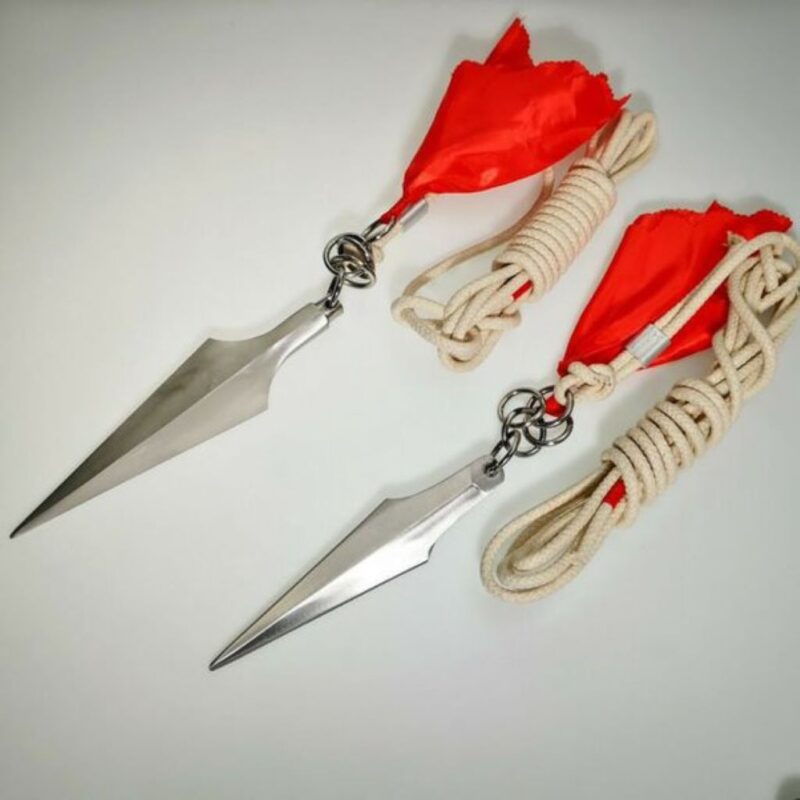
Absolutely! The rope dart, a fascinating weapon with a weighted dart connected to a long rope, boasts a history that stretches back through the annals of ancient Chinese warfare. While often associated with mesmerizing martial arts performances, its battlefield applications are a topic of intrigue and debate among historians and martial artists alike.
Evidence of its use in combat isn’t as abundant as for swords or spears, but there are several key indicators that point towards its practicality on the battlefield. Primarily, historical texts and martial arts manuals from the Ming and Qing dynasties (1368-1912) detail various techniques and strategies for employing the rope dart in combat scenarios. These descriptions range from entangling opponents to striking from a distance, showcasing its versatility as a weapon.
Moreover, the rope dart’s design itself lends credence to its combat potential. The weighted dart could deliver significant blows, while the rope offered options for controlling, disarming, or even ensnaring adversaries. Its unique form allowed for a surprising degree of adaptability, enabling skilled practitioners to strike from unexpected angles and maintain distance from their foes.

However, it’s important to note that the rope dart likely wasn’t a primary weapon for the majority of soldiers. Its mastery required considerable training and dexterity, making it more of a niche weapon for those with the skill and dedication to wield it effectively. This might explain why its presence in historical records isn’t as prominent as other, more conventional weapons.
Despite this, there are accounts of individual warriors and martial artists who were renowned for their proficiency with the rope dart. One such figure is Li Cunxiao, a legendary general from the late Tang dynasty, who was said to have wielded a rope dart with exceptional skill on the battlefield. Such accounts, though often shrouded in myth and legend, suggest that the rope dart could indeed be a formidable weapon in the hands of a skilled practitioner.
Furthermore, the rope dart’s use wasn’t confined to China alone. Similar weapons, such as the Japanese kusarigama and the Okinawan surujin, share a similar principle of combining a weighted object with a chain or rope. While these weapons have their own distinct characteristics and histories, their existence further illustrates the potential of this type of weapon in combat.
Of course, the effectiveness of the rope dart in real-world combat would have depended on various factors, including the skill of the user, the nature of the conflict, and the type of armor worn by opponents. In some scenarios, its reach and versatility could have proven invaluable, while in others, its relative complexity might have been a hindrance.
In modern times, the rope dart has largely transitioned into the realm of martial arts performance and demonstration. Its graceful movements and intricate techniques captivate audiences worldwide, showcasing the artistry and skill that goes into mastering this unique weapon. However, its historical roots in combat should not be forgotten.
While the extent of its use in actual warfare remains a subject of ongoing research and debate, there’s compelling evidence to suggest that the rope dart wasn’t merely a theatrical prop. Its design, historical descriptions, and the accounts of skilled practitioners all point towards its potential as a weapon of war. Perhaps it wasn’t as ubiquitous as other weapons, but in the hands of a skilled warrior, the rope dart could have been a formidable and versatile tool on the ancient battlefield.
Whether as a weapon of war or a symbol of martial artistry, the rope dart continues to fascinate and intrigue. Its legacy serves as a reminder of the ingenuity and creativity that have shaped the history of weaponry, and its enduring popularity speaks to the timeless appeal of this unique and captivating weapon.
