

Are your kitchen cabinets plagued with the unpleasant, lingering scent of grease? Whether you’ve been cooking up a storm or simply haven’t cleaned in a while, grease smells can stick around, making your kitchen feel less than fresh. But don’t worry – there are natural ways to remove that greasy odor and restore freshness to your kitchen cabinets
Grease smells in kitchen cabinets can be a persistent problem, but with the right approach, it’s a problem that’s easily solvable. When grease builds up on surfaces like your cabinets, it doesn’t just look messy; it creates an unpleasant, lingering smell that can spread through your kitchen. Removing this odor doesn’t have to involve harsh chemicals or costly cleaners. In this guide, we’ll explore natural, DIY methods for eliminating grease smells from your kitchen cabinets, making your kitchen a fresh and welcoming space once again.
How Do Grease Smells Affect Your Kitchen?
Grease smells are not just unpleasant; they can also become a breeding ground for bacteria and mold. When grease lingers on your kitchen cabinets, it can accumulate dust, dirt, and food particles. This creates an environment where bacteria thrive, which can lead to musty smells, poor air quality, and even potential health risks. Keeping your cabinets clean isn’t just about aesthetics; it’s about maintaining a healthy environment for you and your family.
What Causes Grease Smell to Build Up in Kitchen Cabinets?
Cooking, particularly frying and grilling, is the main culprit behind grease buildup in kitchen cabinets. During cooking, oil and grease particles are released into the air and can stick to surfaces, including your cabinets. Over time, this builds up, especially if you don’t clean regularly. Factors like poor ventilation in the kitchen can exacerbate the issue, trapping grease particles inside the cabinets, leading to that greasy, unpleasant smell. Additionally, cabinets that are close to stoves, ovens, or fryers are more susceptible to grease buildup, as heat causes oils to become airborne and adhere to nearby surfaces.
How to Remove Grease Smell from Kitchen Cabinets Naturally?
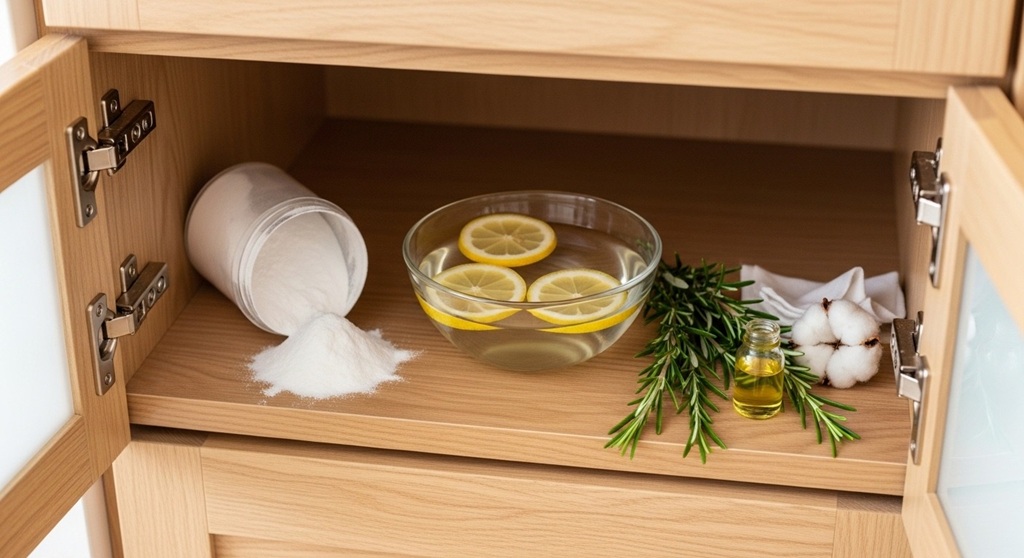
The best way to eliminate grease smell from kitchen cabinets is through natural cleaning solutions that tackle grease effectively without harsh chemicals.
1. How Does Baking Soda Help Eliminate Grease Smell?
Baking soda is a natural deodorizer that absorbs odors and neutralizes grease smells effectively. Here’s how you can use it:
- Sprinkle baking soda generously inside your kitchen cabinets.
- Let it sit for 24 hours to absorb any odors.
- Wipe away the baking soda with a damp cloth.
If your cabinets are still smelling greasy, repeat the process a few times. Baking soda doesn’t just mask odors; it absorbs them, making it one of the most effective natural deodorizing solutions available.
2. Can Vinegar Be Used to Remove Grease Smells from Cabinets?
Yes, vinegar is a powerful natural cleaner that can break down grease and neutralize odors. Here’s how to use it:
- Mix equal parts of white vinegar and water in a spray bottle.
- Spray the solution onto the cabinets and wipe with a soft cloth.
- For stubborn grease spots, let the solution sit for 10-15 minutes before wiping it away.
Vinegar not only helps remove the grease but also kills odor-causing bacteria. The strong scent of vinegar will dissipate quickly, leaving your cabinets smelling fresh.
3. How Does Lemon Juice Remove Grease Smell?
Lemon juice is another fantastic natural cleaner with antibacterial properties that can help break down grease and eliminate bad odors. The acidity in lemon juice works to dissolve grease, while its natural scent refreshes the space. Here’s how to use it:
- Mix one tablespoon of lemon juice with a cup of warm water.
- Spray or apply the solution to your cabinets and scrub with a microfiber cloth.
- Rinse with clean water and dry with a towel.
If you prefer a stronger lemon scent, you can also leave lemon slices inside the cabinet overnight to naturally absorb the grease odor.
4. Can Essential Oils Help with Grease Odors?
Yes, essential oils like tea tree, lavender, or eucalyptus can help mask and remove grease odors in your kitchen. These oils also provide antibacterial properties. To use them:
- Add 10-15 drops of your preferred essential oil to a cup of water.
- Mix and place the solution in a spray bottle.
- Spray the mixture on the inside of your kitchen cabinets and wipe with a cloth.
Not only do essential oils smell wonderful, but they also offer a natural way to disinfect your cabinets and remove odors.
5. How Can Activated Charcoal Absorb Grease Smells?
Activated charcoal is a natural odor absorber that traps and neutralizes smells, including grease. To use activated charcoal for removing odors from your cabinets:
- Place small pouches or open containers of activated charcoal in the affected areas of your cabinets.
- Leave them for a few days to absorb the grease smell.
- Replace the charcoal every few weeks for continuous odor removal.
Activated charcoal doesn’t just mask smells – it absorbs and neutralizes them, leaving your kitchen cabinets fresh and grease-free.
6. How Can Cleaning the Cabinets Prevent Grease Odors?
Regular cleaning is essential to prevent grease buildup, which can lead to odors in your kitchen cabinets. Here’s how you can keep your cabinets clean:
- Wipe down your cabinets weekly with a mixture of warm water and mild dish soap.
- For sticky spots, use a scrub brush or sponge with a baking soda paste to remove grime.
- Ensure your cabinets are thoroughly dried after cleaning to prevent moisture buildup.
By cleaning your cabinets regularly, you can prevent grease from accumulating and help avoid future odors.
Conclusion
Removing grease smell from kitchen cabinets doesn’t have to involve harsh chemicals or expensive cleaners. With simple, natural ingredients like baking soda, vinegar, lemon juice, and essential oils, you can tackle grease odors at home and keep your kitchen smelling fresh. Regular cleaning is key to maintaining a grease-free kitchen, and with these natural solutions, you can easily eliminate those persistent odors and restore a pleasant atmosphere to your space.
Ready to get rid of that grease smell for good? Start cleaning with these natural methods today and breathe easier in your kitchen!
FAQ
1. How often should I clean my kitchen cabinets to prevent grease buildup?
It’s recommended to clean your kitchen cabinets once a week to prevent grease buildup. Wipe them down regularly to avoid the lingering smell of grease and food particles.
2. Can I use essential oils to replace all other cleaning methods?
While essential oils are great for masking odors and providing antibacterial benefits, they should be used in conjunction with other cleaning methods, such as baking soda or vinegar, for the best results in removing grease smells.
3. Is vinegar safe to use on wooden cabinets?
Yes, vinegar is safe to use on most wooden cabinets, but always test a small, inconspicuous area first. You can dilute it with water to make it gentler on the wood.
4. Can I use dish soap to clean my kitchen cabinets?
Yes, a mild dish soap mixed with warm water is an excellent way to clean kitchen cabinets. It’s effective in removing grease without causing damage.
5. How long does it take for activated charcoal to absorb odors?
Activated charcoal can take a few days to a week to absorb odors, depending on the size of the space and the amount of charcoal used.
6. Can I use lemon juice on all types of kitchen cabinets?
Lemon juice is safe for most kitchen cabinets, but be cautious with delicate or unfinished wood. Always test a small area first before applying it to the entire cabinet.
Read More Also: What You Should Consider Before Building Your First Home
Find out: HARDELL 4V Rotary Tool Kit: Everything You Get with 69 Accessories
